Trans Rights: A Controversy That Shouldn't Be
Written as an assembly speech on Transgender Rights and the Trans Act 2026, and delivered at Namrup College of Teacher Education. Shared here in written form, with minor edits for clarity.
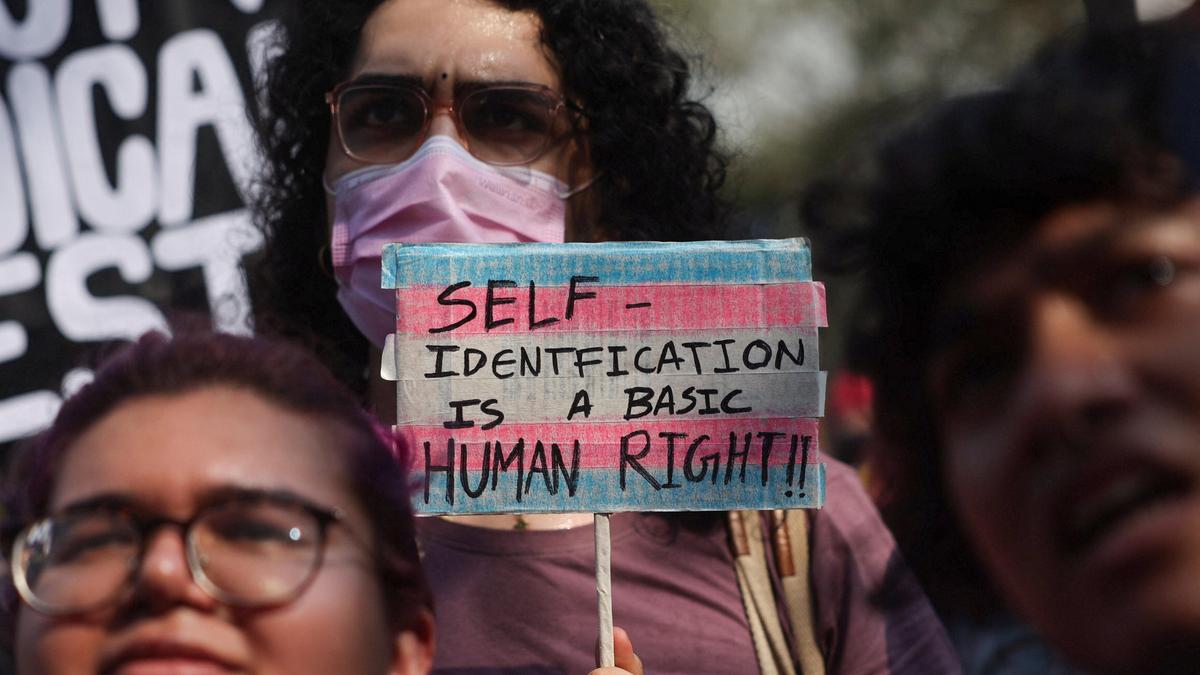
Imagine needing government permission to be yourself. Imagine that you now need an approval by a committee to exist as who you are. That is the “controversy” that my topic is about.
Good morning to the Principal, to my professors, and to all my batchmates. My topic of the day is...
Trans Rights: A Controversy that Shouldn’t Be
Now, many of you may be wondering: why bring this topic up at all? None of us are trans. Our families and friends aren’t trans. Most of the people that we see in our day-to-day lives aren’t trans.
My answer? That is the exact reason why. In an era where our society is getting more and more progressive, there may be a possibility that some of us may find a transgender student in our classrooms. We may have to teach and guide them, we may have to understand their issues and the background they come from.
And a classroom is never truly inclusive if we still hold exclusionary beliefs in ourselves.
First, let us go and think about what a transgender person is. The Human Rights Campaign defines the word “transgender” as “An umbrella term for people whose gender identity is different from the sex assigned at birth.” This can mean a host of things. Someone who does not identify as a man or woman? Valid. Someone who discovered their gender identity at age five? Valid. Someone who was born as a man and found that she’s a woman… at age 50?
That is also valid.
Even films like Super Deluxe or Chandigarh Kare Ashiqui reflect that this journey isn’t something new.
What further complicates this, is how sex is assigned at birth. The doctor looks at a baby, and decides whether they are male or female. However, there are two issues with this. First is that often, when the anatomy isn’t clear, doctors may pressure parents to choose surgery... often before the child is old enough to understand or consent. And sometimes, that child grows up and discovers later in life—often at ages like 18, 25 or 40 even—that their identity does not match those early decisions.
Then there’s the additional complication of chromosomes. We have all been taught that females have XX chromosomes, and males have XY. However, there are cases of people having their chromosomes tested, and finding that their chromosomes don’t fit into these categories. Men have been found with XX chromosomes, women with XY... and most of them go through their lives with no significant medical issues. And there may be more cases of this than people think, because most of us never have our chromosomes tested.
What I’m trying to say is that, even biologically, the idea of strictly “male” or “female” isn’t as rigid as we’ve been taught.
Now where does this leave us? This leaves us in a position where the classification of who a transgender person is can only be defined by the person themselves, and no one else. Not the government, not a medical committee, not their friends and family. Themselves.
And here’s where the most recent Trans Act 2026 comes in.
The Transgender Persons (Protection of Rights) Amendment Act 2026 — passed on the 30th March — removes the official validity of self-identification as Transgender by replacing it with a mandatory medical certificate. Not only that, it narrows the definition of “Transgender” to communities like kinner and hijra, while excluding people that do not belong to these communities.
For many of us, this Amendment is irrelevant. For many transgender people, it threatens their identity and risks forcing them into boxes they never belonged in.
Not only that, but it also criminalizes something extremely important to transgender people: a support system. While not explicitly, the broad language it adopts on “coerced identity” allows it to — potentially — legally criminalize the independent support systems such trans people have. Discovering that you’re trans is a long and difficult journey that often takes years, even decades. The social stigma, the mockery, and the lack of opportunities does not make self-acceptance easy. Hence, safe spaces where you can experiment and question your gender identity is integral to self-discovery.
This Amendment may threaten even that.
And this is the reason why I bring up this topic here. Because someday, some of you may have a student sitting in your classroom, quietly questioning who they are. And in that moment, the question won’t be whether they are transgender or not. The question will be: whether they feel safe enough to be.
And that... should never be a controversy.
Resources:
For this speech, I have synthesized data from legal, biological, and pedagogical frameworks, specifically:
- The NALSA v. Union of India (2014)
- The Transgender Persons (Protection of Rights) Amendment Act, 2026
- The Article "Sex Redefined" by Claire Ainsworth (Nature, 2015), that includes aspects like the SRY Gene Research, and
- The Yogyakarta Principles
Resources I highly recommend:
- The Gender Dysphoria Bible
- (more coming soon)
Image credit: Reuters; taken from The Hindu article: Parliament clears Transgender Bill amid an uproar